
Papers Using VisualTorch#
Published research that has used VisualTorch to visualize model architectures. Used it in your own research, or know of a paper that cites it - even if it’s not yours? Open a pull request to add it here, or tell us about it and we’ll add it for you.
Paper |
Venue (Year) |
|---|---|
Deep learning-based high-information-content graph representation of early stage bacterial biofilms |
npj Biofilms and Microbiomes (2026) |
Energy-Efficient Epileptic Seizure Prediction Using Spiking Neural Networks |
IEEE ISCAS (2026) |
Materials, MDPI (2026) |
|
Kolmogorov–Arnold neural network for identification of functional groups from FTIR spectra |
Chemometrics and Intelligent Laboratory Systems (2025) |
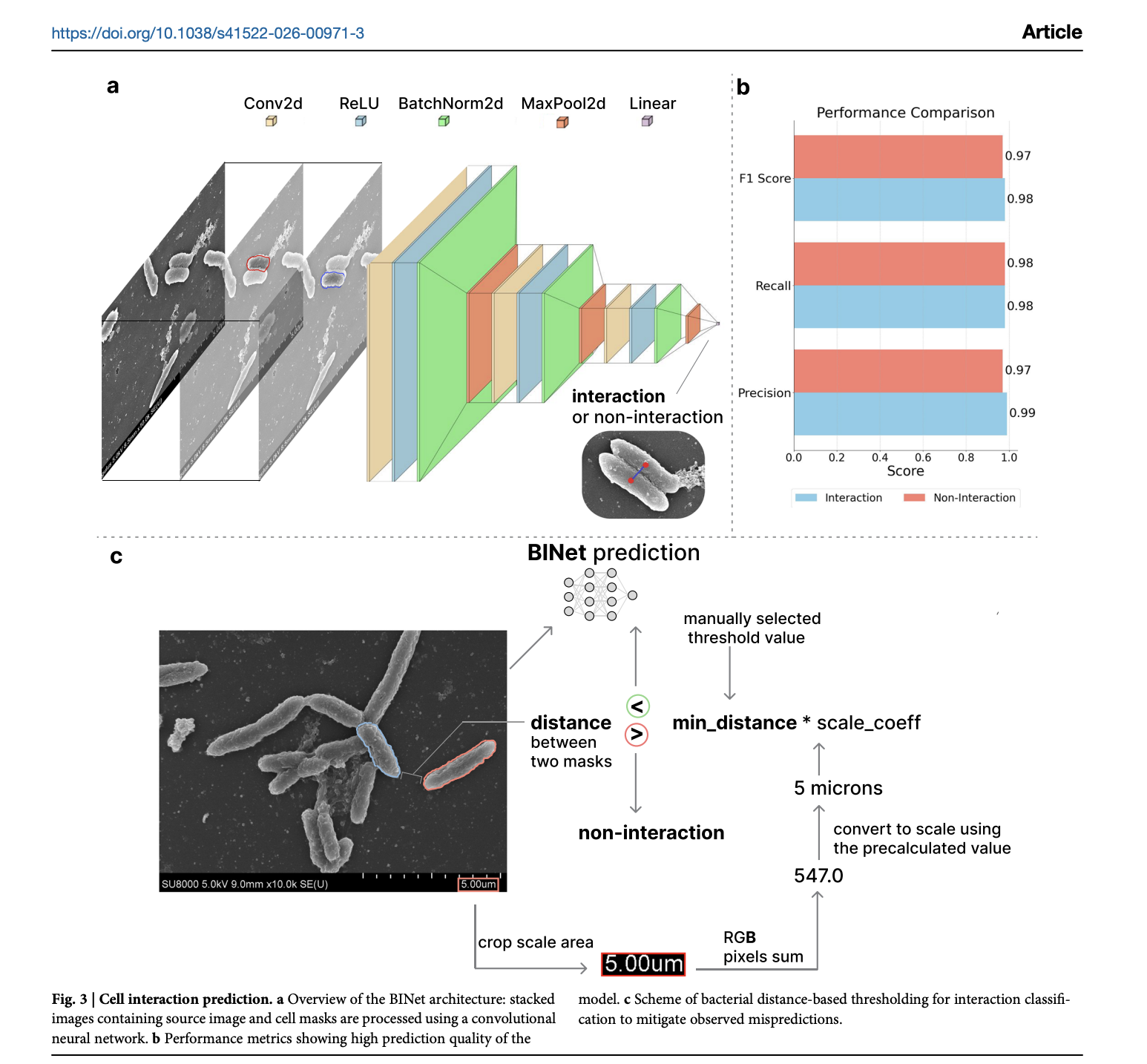
Deep learning-based high-information-content graph representation of early stage bacterial biofilms#
Authors: Nersesyan, L. E., Boiko, D. A., Kurbanalieva, S., Dzhemileva, L. U., Kozlov, K. S., Ananikov, V. P. (2026) Venue: npj Biofilms and Microbiomes Link: https://www.nature.com/articles/s41522-026-00971-3
Models early-stage bacterial biofilms as interaction graphs (cells as vertices, predicted intercellular interactions as edges), combining Mask R-CNN for cell segmentation with a custom network (BINet) for interaction prediction - enabling classification of developmental stage and substrate type from image-derived graph features.
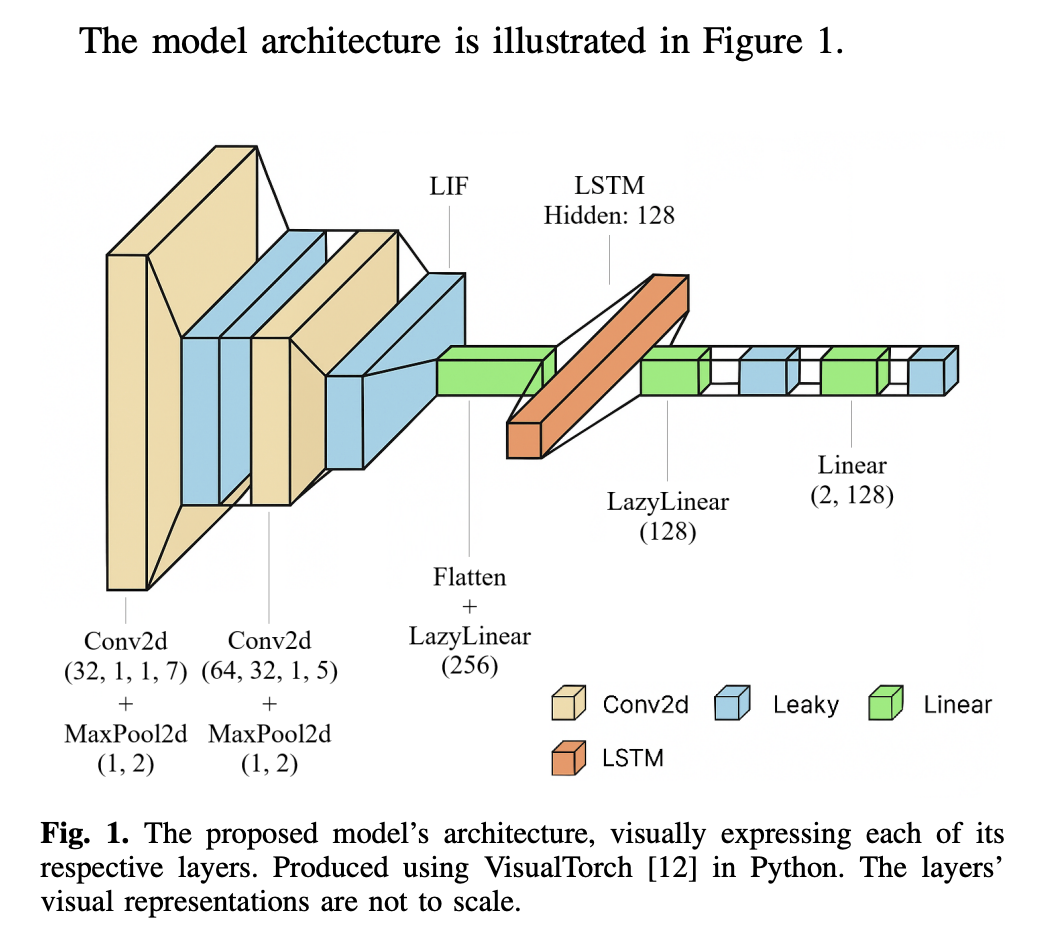
Energy-Efficient Epileptic Seizure Prediction Using Spiking Neural Networks#
Authors: Brady, A., Moore-Hill, D., Khan, F., Daoud, H. (2026) Venue: IEEE International Symposium on Circuits and Systems (ISCAS) Link: https://ieeexplore.ieee.org/document/11562867
A patient-specific model, trained on the CHB-MIT scalp EEG dataset, that combines convolutional layers with Leaky Integrate-and-Fire spiking neurons and a recurrent network to detect pre-ictal (pre-seizure) brain states - the low energy consumption of spiking neurons targets power-constrained, on-device seizure prediction for wearable/IoT devices.
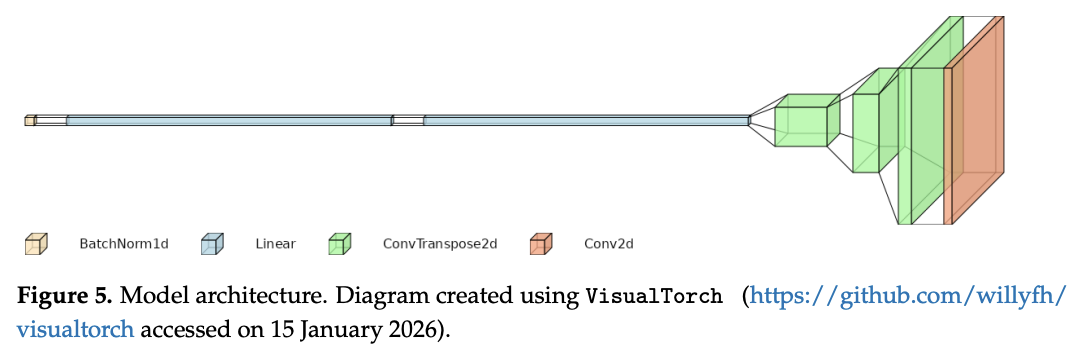
Failure Evaluation of Steel Plate Shear Walls in Multi-Storey Steel Buildings Under Seismic Excitation Using Convolutional Neural Networks#
Authors: Bonfini, P., Schetakis, N., Sukhnandan, J., Drosopoulos, G. A., Stavroulakis, G. E. (2026) Venue: Materials (MDPI) Link: https://www.mdpi.com/1996-1944/19/5/878
Trains a CNN on physics-based finite element simulations to predict equivalent plastic strain (failure distribution) on steel plate shear walls from building geometry and seismic intensity, for use in structural digital twins.
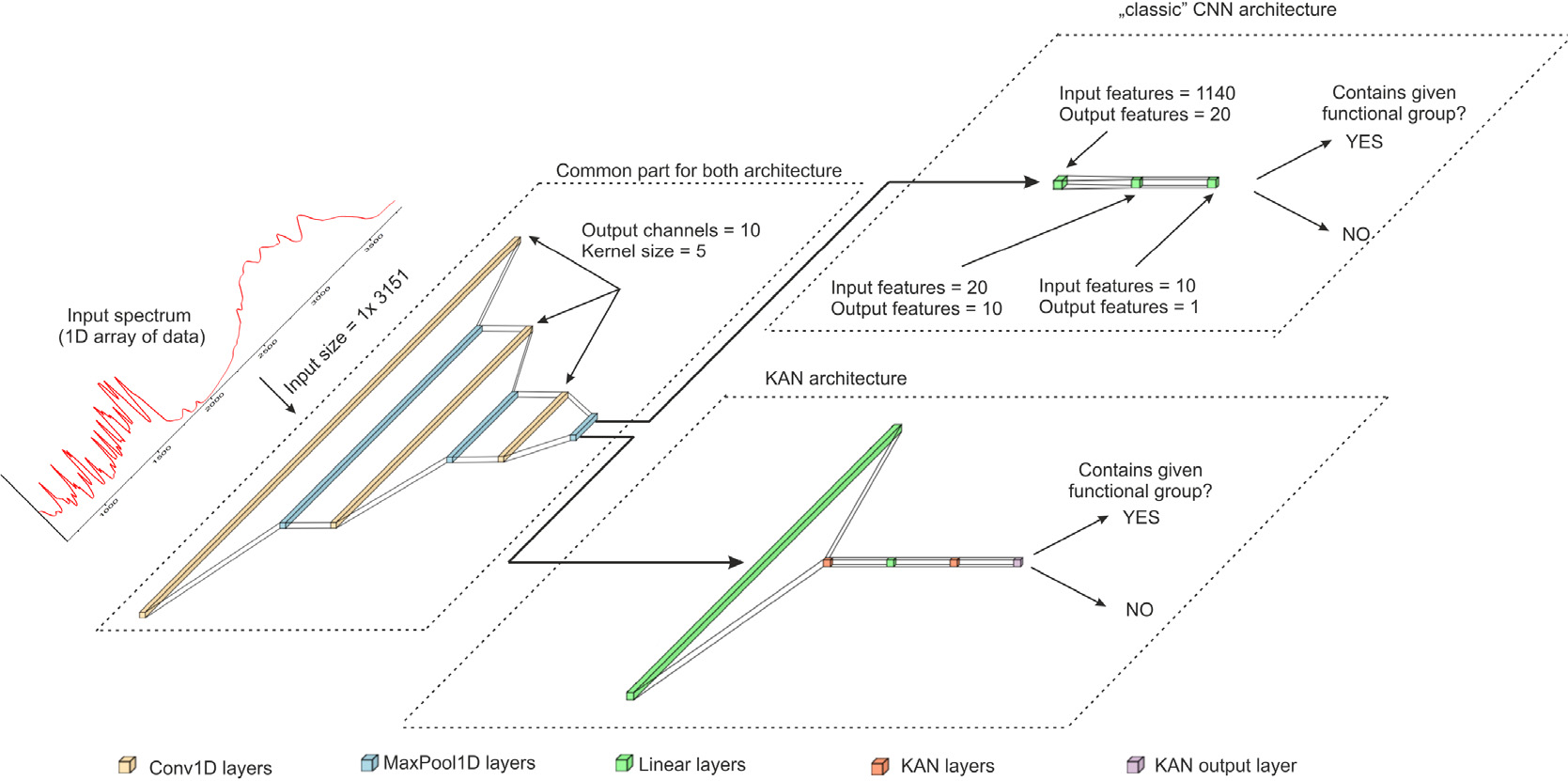
Kolmogorov–Arnold neural network for identification of functional groups from FTIR spectra#
Authors: Urbańczyk, T., Bożek, J., Mirczak, S., Koperski, J., Krośnicki, M. (2025) Venue: Chemometrics and Intelligent Laboratory Systems Link: https://www.sciencedirect.com/science/article/pii/S0169743925001066
Trains separate binary classifiers to identify 22 molecular functional groups from one-dimensional FTIR spectra. The study compares a classic CNN ending in fully connected linear layers with a CNN-KAN that replaces those final layers with Kolmogorov–Arnold layers, while both architectures share the same convolutional feature extractor.